When searching for best practices and ready-made recommendations for building a business process management system, sooner or later, you will encounter frameworks. Let's break down what they are and how to benefit from working with them.
A process framework is a list of processes presented in the form of a tree, ranging from high-level blocks to detailed operations. It can serve as a reference when creating a company’s process map. Process frameworks can be general or industry-specific.
Some popular process frameworks include:
APQC Process Classification Framework
eTOM Business Process Framework
SCOR Framework
The creators of frameworks have done a tremendous job. It seems simple — just take and use the ready-made solutions. But the question remains: what should be done with this entire list of business processes?
Implementing any framework in practice is a non-trivial task. According to the findings of the APQC 2018 “Process and Performance Management: Priorities and Challenges Survey Summary”, one in two respondents faces difficulties applying frameworks practically within their companies (see Fig. 1).

Fig. 1. Challenges encountered when working with frameworks in organizations
From our experience, trying to turn a process framework into a company’s process map doesn’t lead to good results. It becomes lifeless and quickly stops being used as a working tool due to its overcomplication and generalization. At best, it will only be referred to when it’s necessary to obtain or confirm the next ISO certificate.
A process map is the painstaking work of the executive team. As a result of this work, key managers have a shared understanding of the company’s business model and the role of business processes in its execution.
Check the completeness of the process map. If, after creating the process map, you feel something is missing, refer to the framework and check its reference model of business processes. You may find processes that you overlooked.
Study metrics for evaluating business process performance. Frameworks provide recommendations on metrics and KPIs that can be used to assess the effectiveness of business processes.
Benchmarking business process performance. Some frameworks collect information about best practices within the industry. It’s useful to analyze your metrics and management approaches against market leaders (see Figure 2).
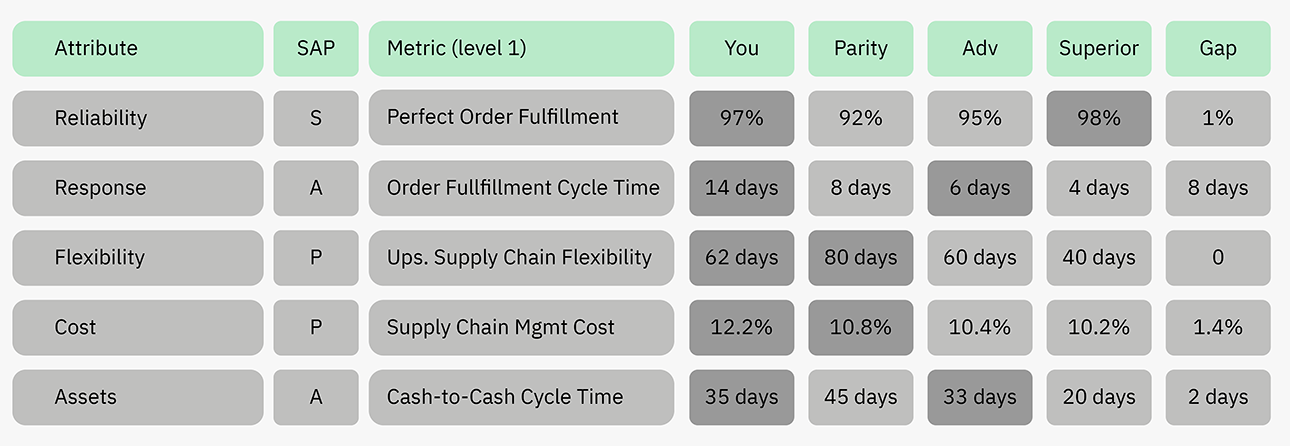
Figure 2. SCOR framework. Benchmarking business process performance.
Working with a framework should be aligned with the organization’s needs and process maturity level. For some, it might be about recognizing the existence of business processes; for others, it could involve defining their boundaries, or even striving to achieve industry-leading performance metrics.
Choose a topic that interests you and read the most popular and useful articles from the Bureau: