Digital Transformation: a check-list for successful transformations
As mentioned earlier, the digital transformation of organisations is inevitable.
We could choose various paths for it: BI-analytics, omniscient promotion and communication, employee experience management, BPMS platforms, new products.
The process of digital transformation is unique for every organisation. We have identified six components, which should be emphasised when preparing for the implementation of digital changes. Use this as a checklist before starting your project.
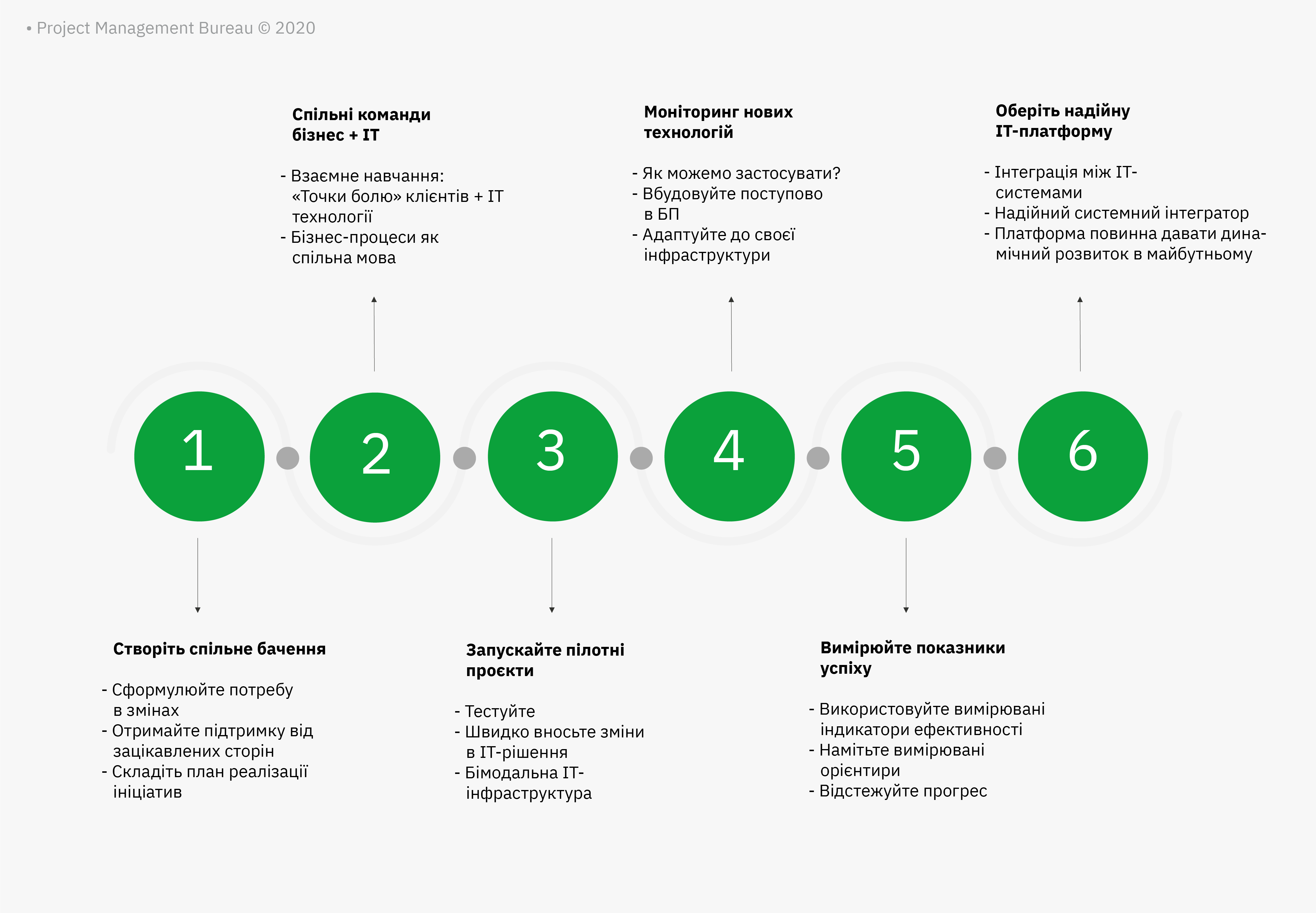
Рic.1. Digital-transformation, check-list
1. Create a shared vision
Before embarking on a digital transformation, formulate the need for change. The company, whose employees believe that changes are not needed, is unlikely to succeed in innovating and finding new approaches to attracting customers
Get support from key stakeholders at the stage of choosing initiatives for transformation
Make a clear plan for implementing initiatives (with a detailed description of the current state and the final result). This will help coordinate staff efforts and minimise potential risks
2. Form joint teams of business representatives and IT
Include into the project teams specialists with a deep understanding of the business (its various functions) and IT visionaries, who are able to listen and hear. The problem of communication between business and IT is still relevant
Provide an environment in which IT professionals can train business representatives in modern informational technology, and business representatives communicate to IT professionals customer needs, their “pain points”, and the actions of your competitors. Focus on mutual learning
Use a common language in the form of business process models and a single terminology. This will strengthen mutual understanding between business and IT.
3. Select the appropriate technology through the implementation of pilot projects
Launch pilot projects and quickly test new technologies
Ensure prompt changes to existing IT solutions. The speed of project implementation become of primary importance
Use bimodal IT infrastructure (for example, an ERP and BPMS systems). This will allow integrating different technologies, which will become the basis for rapid changes
4. Monitor new technology regularly
On a regular basis, monitor key innovative technologies. Ask yourself a question: “How can we apply this technology to our business?”
Choose the technology that are available and relevant to you (see figure 2), build them in gradually into the company’s business processes
When adopting new technology for your company, make maximum use of your already existing infrastructure (hard & software)
Рic.2 Industry 4.0 framework (Source: 2016 Global Industry 4.0 Survey)
5.Measure success rates
Measure the economic impact of new projects. The introduction of new technology should not be an end in itself
For subsequent evaluation of project results, use measurable performance indicators. Achieving these indicators will stimulate the entire project team to move forward
Set measurable milestones on your path to digital transformation. Track the accuracy of your movement towards the goal according to them
6. Pay attention to the choice of an appropriate IT platform, which will become the basis for future innovations
Find an IT platform that will provide integration between existing systems, and will also complement and expand their new functions
Choose a system integrator that will help you implement and integrate between systems
Make sure that the new IT platform will ensure reliability and dynamic development in the future.