When Gartner analysts first introduced the concept of hyperautomation, it sounded more like a vision of the future. The idea was that automation would extend beyond the IT department — and that everyday users could independently create and improve business processes. At the time, it felt more like a call to action than a tangible reality.
But with the rise of accessible, user-friendly AI tools, that vision has become a practical task many companies are actively tackling.
Automating cross-functional processes has never been easy. Data is scattered across CRM, ERP, Excel, email, and presentations. Each system operates in its own silo, making integration a challenge. Bridging these silos meant hours of manual effort — checking, moving, merging, and aligning data across platforms. Not only was it time-consuming, it also introduced opportunities for errors.
BPMS (Business Process Management Systems), and later RPA (Robotic Process Automation), brought the first real breakthroughs. Bots began automating repetitive actions: copying data, launching workflows, exchanging information across platforms. However, deploying these solutions required specialized expertise. The entry barrier for everyday users (often called ‘citizen developers’) remained high.
AI pushes automation beyond routine tasks — enabling processes to act with more autonomy and intelligence. The shift isn’t just about speed — it’s about handing over more cognitive tasks to systems that can learn, interpret, and act.
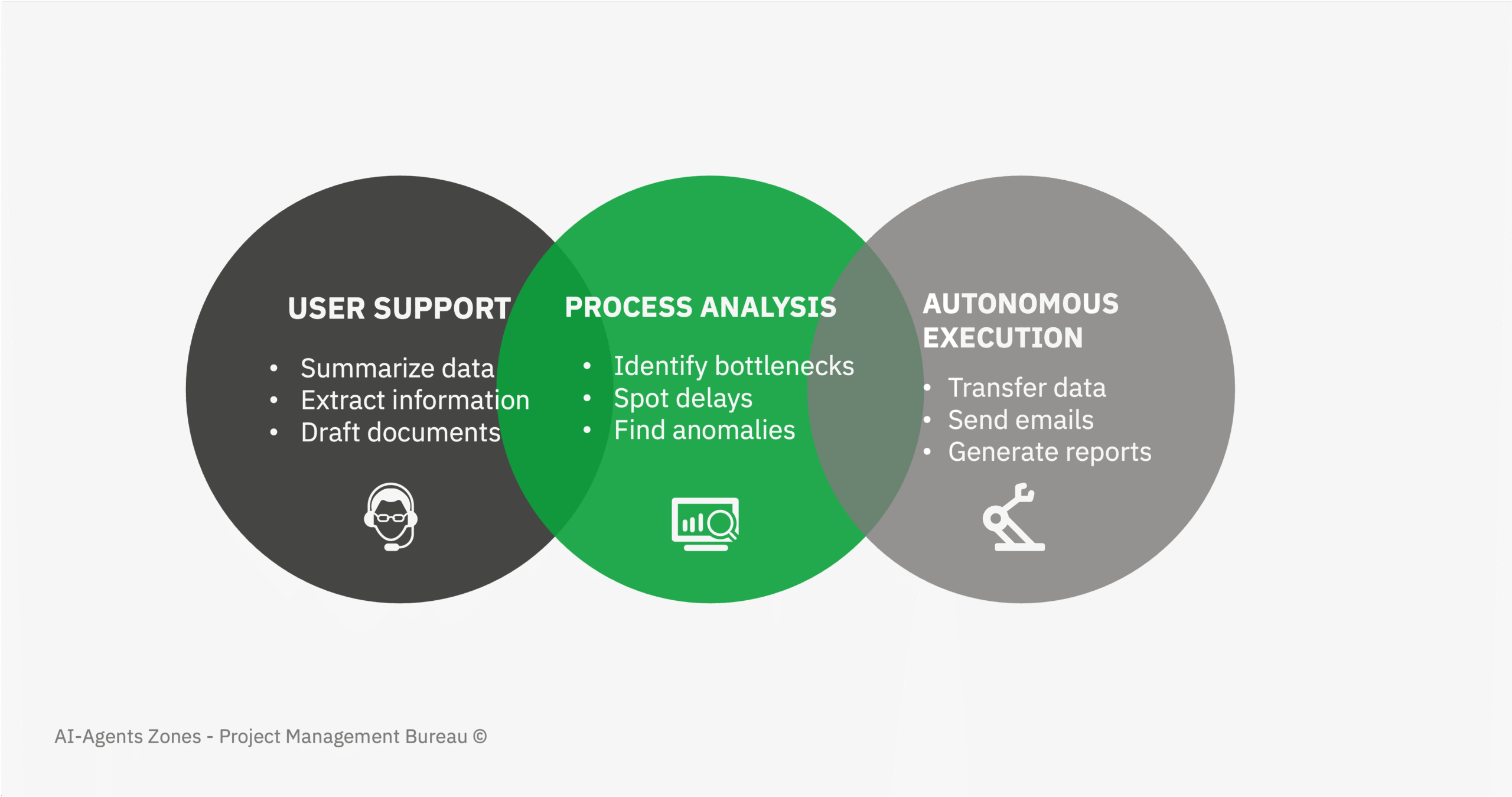
Where AI already delivers impact:
1. Guiding users through tasks
2. Analyzing how processes really run
3. Executing tasks independently
AI agents can act as virtual employees: transferring data between systems, updating records, sending emails, and generating reports — all without human intervention.
Here’s how it works in a real example. Previously, a client’s employee would receive a request via email, manually enter the data into the CRM, prepare a commercial proposal, and if confirmed, transfer the data into the ERP for contract preparation. Then, they would notify the accounting team to monitor prepayment.
The updated process looks like this:
The whole process takes five minutes — instead of two hours.
Today’s AI models take us one step closer to hyperautomation. Hyperautomation is no longer a vision — it’s a competitive advantage. And the teams who embrace it today are reshaping how their organizations operate tomorrow.
Choose a topic that interests you and read the most popular and useful articles from the Bureau: